

Tesla Gearbox Fluid Refill Set
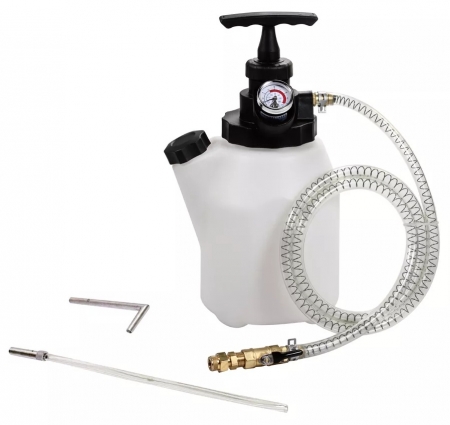
Model
KA-6078T
Specification:
- Tesla vehicles use front and rear drive units, not traditional transmissions. Precise ATF refilling through side-mounted fill ports is critical—Kingtool KA-6078T makes it fast, accurate, and safe for Model S, X, 3, and Y.
- Universal Compatibility: 3 liter manual tank with 2 adapters specifically designed for Tesla all models.
- Precision Measurement: Tank with measuring scale for precise refill on Tesla gearboxes.
- Durable Construction: Hose with internal wire spring does not get kinked nor tangled.
- Easy Filling: Cap on the tank side for pouring new ATF / gearbox oil into the tank.
Side Fill Cap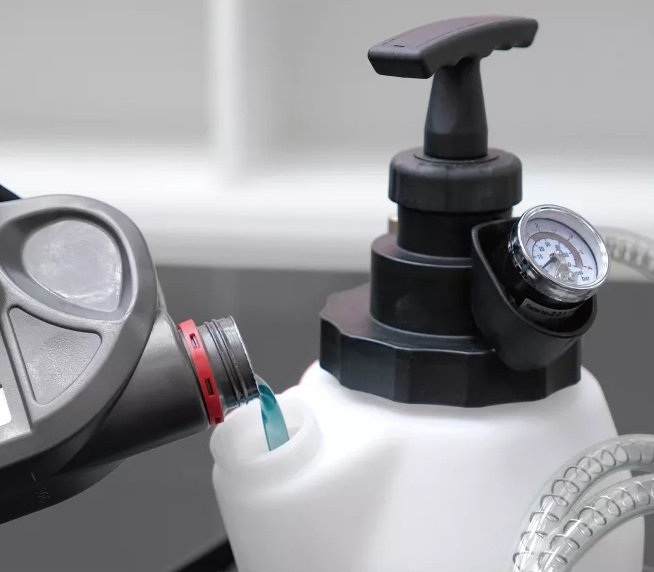 |
Precise Fill Every Time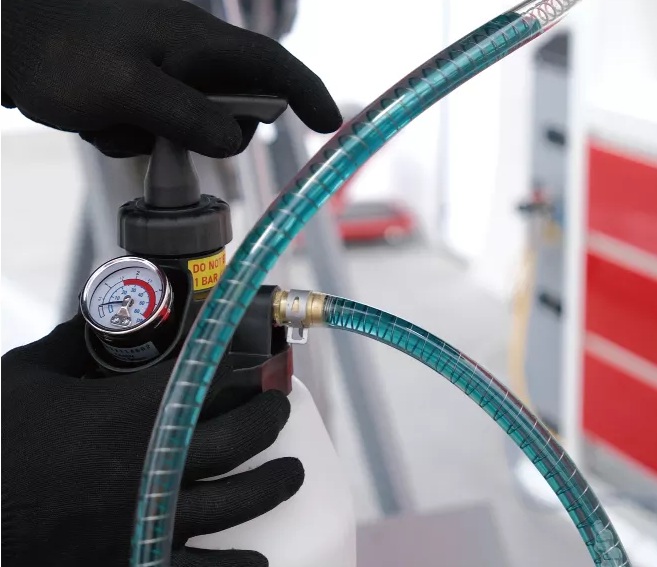 |
Soft hose & hook-type adapter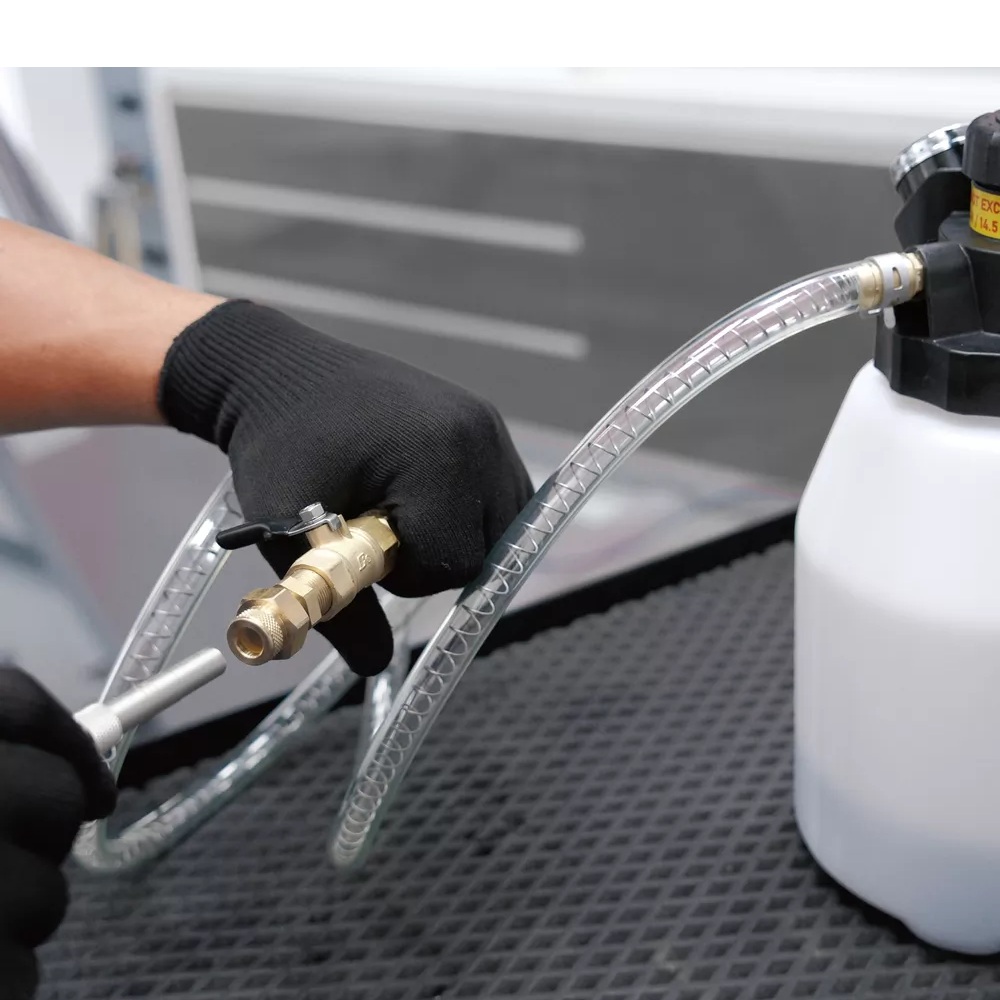 |
Why Mechanics Choose KA-6078T Tesla Gearbox Refill Set
| Tesla-Compatible Adapters | .jpg) |
| • Soft hose & hook-type adapters • Direct connection to side fill ports • Fully compliant with Tesla service manuals |
|
| Optimized Capacity | |
| • Most drive units: 1.3–3 L • High-performance rear units: up to 3.75 L • Two-drive-unit refills handled efficiently |
|
| Professional Features | |
| • Manual pump for precise flow control • Pressure release button & hose valve for safe operation • Side fill cap for faster setup • Reinforced hose prevents kinks & leaks 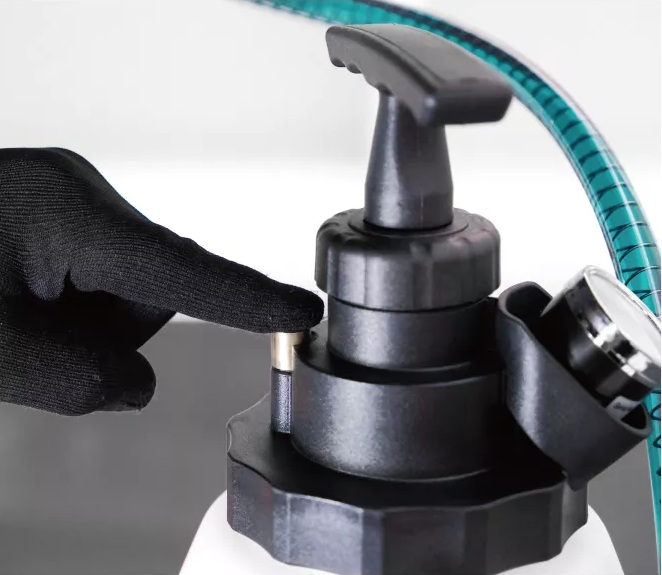 |
Application Note: Listed capacities represent the minimum required refill volumes.
| Tesla service manuals specify an allowable variance of up to 200 ml. Make | Model | Year | Location | Capacity |
|---|---|---|---|---|
| Tesla | Model 3 | 2017-2023 | front drive unit | 1,300 ml |
| Tesla | Model 3 | 2017-2023 | rear drive unit (2DU) | 2,100 ml |
| Tesla | Model 3 | 2017-2023 | rear drive unit (3DU) | 2,100 ml |
| Tesla | Model 3 | 2017-2023 | rear drive unit (4DU) | 2,300 ml |
| Tesla | Model 3 | 2024-2026 | front drive unit | 1,300 ml |
| Tesla | Model 3 | 2024-2026 | rear drive unit (3DU) | 2,100 ml |
| Tesla | Model S | 2012-2020 | front drive unit (Raven) | 1,800 ml |
| Tesla | Model S | 2012-2020 | front drive unit (small) | 1,750 ml |
| Tesla | Model S | 2012-2020 | rear drive unit (large) | 1,400 ml |
| Tesla | Model S | 2012-2020 | rear drive unit (small) | 2,250 ml |
| Tesla | Model S | 2021-2026 | front drive unit | 1,800 ml |
| Tesla | Model S | 2021-2026 | rear drive unit (base) | 2,100 ml |
| Tesla | Model S | 2021-2026 | rear drive unit (performance) | 3,750 ml |
| Tesla | Model X | 2015-2020 | front drive unit (Raven) | 1,800 ml |
| Tesla | Model X | 2015-2020 | front drive unit (small) | 1,750 ml |
| Tesla | Model X | 2015-2020 | rear drive unit (large) | 1,400 ml |
| Tesla | Model X | 2015-2020 | rear drive unit (small) | 2,250 ml |
| Tesla | Model X | 2021-2026 | front drive unit | 1,800 ml |
| Tesla | Model X | 2021-2026 | rear drive unit (base) | 2,100 ml |
| Tesla | Model X | 2021-2026 | rear drive unit (performance) | 3,750 ml |
| Tesla | Model Y | 2020-2024 | front drive unit | 1,300 ml |
| Tesla | Model Y | 2020-2024 | rear drive unit (3DU) | 2,100 ml |
| Tesla | Model Y | 2020-2024 | rear drive unit (4DU) | 2,300 ml |
| Tesla | Model Y | 2025-2026 | front drive unit | 1,300 ml |
| Tesla | Model Y | 2025-2026 | rear drive unit (3DU) | 2,100 ml |
General Guidelines
PREPARATION
- Remove (gearbox) oil filter and fill plug as suggested on Tesla service manuals for Model 3, S, X, and Y
- Prepare adequate volume of gearbox fluid as specified on the Tesla service manuals, or with reference to the APPLICATIONS section
- Open the side cap and pour new gearbox fluid into the tank
- Choose a suitable adapter and connect the adapter to the adapter connector on the refill hose end
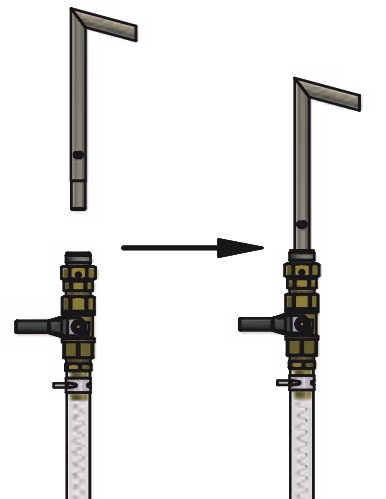
REFILL THE FLUID
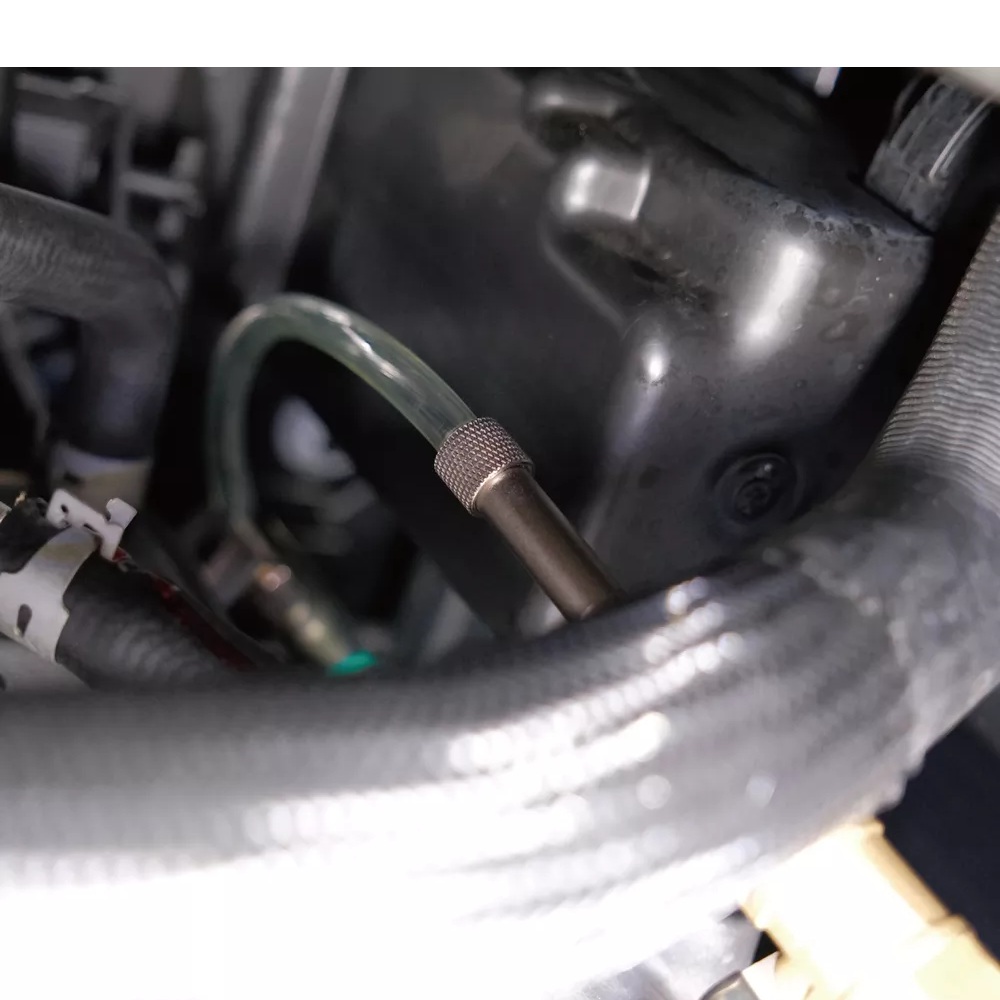
- Connect the adapter to the fill plug hole on gearbox and open the hose valve
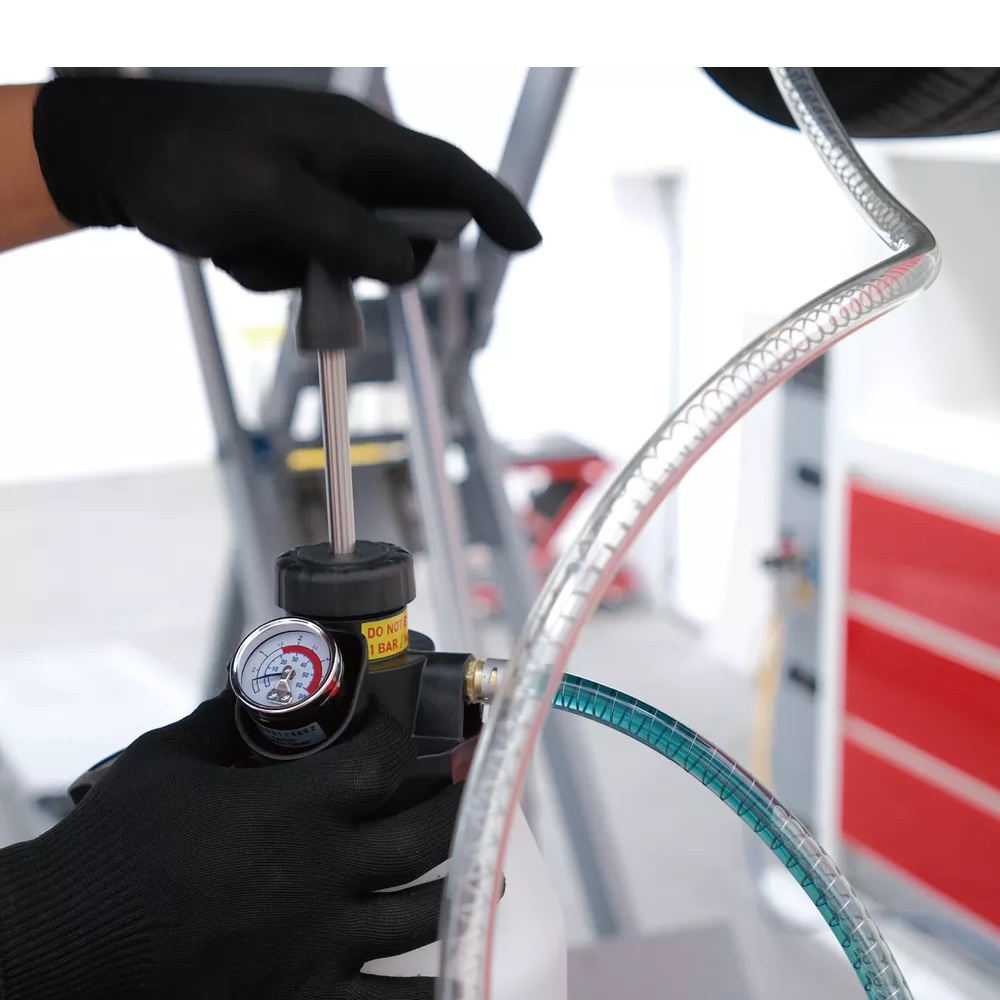
- Apply pressure by using the hand pump, and the gearbox fluid will be introduced into the gearbox subsequently
- When the fluid is refilled to the proper level, close the hose valve
- Press the pressure release button to make sure no remaining pressure is in the tank
- Disconnect the adapter from the hose end and clean the residual oil
- Connect the fill plug back to the gearbox
Key Features
1. Master-cylinder pressure bleeding—one-person brake bleeding and fluid change
Pressurizes the brake system from the master cylinder to build stable system pressure, allowing a single operator to perform bleeding and fluid replacement in sequence. Helps reduce manpower coordination and waiting time in repair shops, and keeps the bleeding rhythm more consistent.
2. Pressure-driven fluid push-out—helps remove old fluid and contaminants
Uses pressurized flow to push brake fluid out of the system, suitable for routine maintenance to flush out old fluid and suspended debris. Shortens overall service time and lowers the chance of unstable pedal feel after fluid replacement due to residual contamination.
3. 5L tank capacity + safety pressure relief valve—smoother continuous operations
The 5-liter tank supports consecutive jobs or fleet maintenance with fewer refills. The built-in safety pressure relief valve supports safer pressure control and makes it easier to standardize shop SOPs.
4. Includes a European standard threaded adapter—improves sealing and fitment
Supplied with a European standard threaded adapter for common European brake fluid reservoir interfaces, reducing the risk of leakage or pressure loss caused by poor fit or sealing. In practice, always verify the vehicle’s reservoir thread specification and sealing surface type before installation.
5. Compatible with DOT 3 / DOT 4 / DOT 5.1 (NOT compatible with DOT 5)—clear fluid compatibility boundary
Clearly specifies supported brake fluid types, making it easy to incorporate into work orders, training, and SOPs. Helps reduce disputes and rework caused by using the wrong brake fluid.
6. One-way valve at the hose-end connector—less backflow and splashing after disconnect
A one-way valve is built into the hose-end connector to reduce brake fluid backflow and splashing when disconnecting from the master cylinder. Keeps the work area cleaner and can shorten cleanup time between jobs.
7. Complete packing and shipping data—ideal for purchasing setup and logistics planning
Packing method, unit weight, and master carton quantity are provided for easy SKU setup, warehousing, and freight estimation. Reduces communication overhead for customers who require fixed shipping specifications.
.png) NOT suitable for DOT 5 (silicone-based brake fluid)
NOT suitable for DOT 5 (silicone-based brake fluid)
✔ Efficiently pushes out debris and air bubbles
✔ 5L / 5.28 qt large-capacity tank
✔ Equipped with safety pressure relief valve
✔ Includes European threaded adapter
✔ One-way valve prevents fluid spill after hose disconnection
· Inconsistent pedal pumping pressure
· Higher risk of fluid spills
· No overpressure protection
※ Pressure bleeding is widely recognized as more stable than manual pedal pumping.
✔ Stable pressure output
✔ Enhanced safety with relief valve & one-way valve
✔ Cleaner working environment
Solutions
Solution 1 – Logo-Printed Brake Pressure Tank for Private Label Programs
Turn the brake pressure bleeder tank into a logo-printed brake bleeding tool for automotive tool brands, private label programs, and distributors.
Key Benefits
Enhance product identification with custom stickers for brake pressure bleeder kits.
Key Benefits
Solution 3 – Packaging Options for Brake Pressure Bleeder Kits
Choose flexible packaging solutions for brake bleeding tools and brake fluid service equipment.
Key Benefits
The 5-liter brake pressure bleeder tank supports efficient brake bleeding and brake fluid replacement.
Key Benefits
Support OEM projects and multi-market distribution with flexible branding and packaging options.
Key Benefits
Q&A
Q1. Which brake fluid specs are supported? Is DOT 5 allowed?
A: Suitable for DOT 3, DOT 4, and DOT 5.1 brake fluids; NOT suitable for DOT 5 (silicone-based).
Q2. What are the benefits of pressure bleeding?
A: The manufacturer states it is efficient in pushing out debris from the brake system, improving service efficiency during brake fluid replacement.
Q3. Can it be used on vehicles with ABS/ESP?
A: Pressure bleeding is commonly used in brake service; however, bleeding order and whether scan-tool activation is required should follow the OEM service procedure. (Operational recommendation)
Q4. How can I reduce leakage/spill risk during use?
A: Ensure the adapter is securely threaded and sealed before pressurizing, and check connections for tightness. The hose end check-valve design helps reduce spill risk upon disconnection.
Q5. Can brake fluid be stored in the tank long-term? What should I do after use?
A: Long-term storage is not recommended. Brake fluid is hygroscopic—dispose/handle remaining fluid per shop procedure, then clean the tank/hoses and store dry to reduce moisture pickup and contamination risk.
1. Master-cylinder pressure bleeding—one-person brake bleeding and fluid change
Pressurizes the brake system from the master cylinder to build stable system pressure, allowing a single operator to perform bleeding and fluid replacement in sequence. Helps reduce manpower coordination and waiting time in repair shops, and keeps the bleeding rhythm more consistent.
2. Pressure-driven fluid push-out—helps remove old fluid and contaminants
Uses pressurized flow to push brake fluid out of the system, suitable for routine maintenance to flush out old fluid and suspended debris. Shortens overall service time and lowers the chance of unstable pedal feel after fluid replacement due to residual contamination.
3. 5L tank capacity + safety pressure relief valve—smoother continuous operations
The 5-liter tank supports consecutive jobs or fleet maintenance with fewer refills. The built-in safety pressure relief valve supports safer pressure control and makes it easier to standardize shop SOPs.
4. Includes a European standard threaded adapter—improves sealing and fitment
Supplied with a European standard threaded adapter for common European brake fluid reservoir interfaces, reducing the risk of leakage or pressure loss caused by poor fit or sealing. In practice, always verify the vehicle’s reservoir thread specification and sealing surface type before installation.
5. Compatible with DOT 3 / DOT 4 / DOT 5.1 (NOT compatible with DOT 5)—clear fluid compatibility boundary
Clearly specifies supported brake fluid types, making it easy to incorporate into work orders, training, and SOPs. Helps reduce disputes and rework caused by using the wrong brake fluid.
6. One-way valve at the hose-end connector—less backflow and splashing after disconnect
A one-way valve is built into the hose-end connector to reduce brake fluid backflow and splashing when disconnecting from the master cylinder. Keeps the work area cleaner and can shorten cleanup time between jobs.
7. Complete packing and shipping data—ideal for purchasing setup and logistics planning
Packing method, unit weight, and master carton quantity are provided for easy SKU setup, warehousing, and freight estimation. Reduces communication overhead for customers who require fixed shipping specifications.
When to Use
- For replacing DOT 3, DOT 4, and DOT 5.1 brake fluids.
- When performing one-person brake bleeding operations.
- When debris or air bubbles must be efficiently removed from the brake system.
- For vehicles using European standard threaded reservoir adapters.
- When consistent and controlled pressure is required.
NOT suitable for DOT 5 (silicone-based brake fluid)
Why You Need It
✔ Enables true one-person operation✔ Efficiently pushes out debris and air bubbles
✔ 5L / 5.28 qt large-capacity tank
✔ Equipped with safety pressure relief valve
✔ Includes European threaded adapter
✔ One-way valve prevents fluid spill after hose disconnection
Risks of Not Using It
· Requires two-person operation· Inconsistent pedal pumping pressure
· Higher risk of fluid spills
· No overpressure protection
※ Pressure bleeding is widely recognized as more stable than manual pedal pumping.
Benefits After Using It
✔ Improved efficiency✔ Stable pressure output
✔ Enhanced safety with relief valve & one-way valve
✔ Cleaner working environment
Solution 1 – Logo-Printed Brake Pressure Tank for Private Label Programs
Turn the brake pressure bleeder tank into a logo-printed brake bleeding tool for automotive tool brands, private label programs, and distributors.
Key Benefits
- The pressure tank body can be printed with your logo, creating a branded brake pressure bleeder for professional workshop use.
- Logo printing requires an MOQ of 120 sets, making it suitable for OEM and private label projects.
- A logo-printed pressure tank is repeatedly used during brake fluid service and brake bleeding operations, helping increase brand visibility in workshops.
Enhance product identification with custom stickers for brake pressure bleeder kits.
Key Benefits
- Stickers can include your logo, product name, and basic tool information for easier identification.
- Customers may provide their own artwork, or we can assist with complimentary sticker design.
- Suitable for automotive tool brands, distributors, and aftermarket brake service tools.
Solution 3 – Packaging Options for Brake Pressure Bleeder Kits
Choose flexible packaging solutions for brake bleeding tools and brake fluid service equipment.
Key Benefits
- A standard packaging option is available for general distribution and workshop supply.
- Packaging can also include branded labels or custom sticker designs for private label tool programs.
- Suitable for retail channels, e-commerce platforms, and automotive tool distributors.
The 5-liter brake pressure bleeder tank supports efficient brake bleeding and brake fluid replacement.
Key Benefits
- The pressure system allows one-person brake bleeding operation, improving workshop efficiency.
- The 5-liter tank provides stable brake fluid supply during brake service procedures.
- Compatible with DOT3, DOT4, and DOT5.1 brake fluids, commonly used in modern vehicles.
Support OEM projects and multi-market distribution with flexible branding and packaging options.
Key Benefits
- Branding, labels, and packaging can be adjusted to meet different regional market requirements.
- Ideal for automotive tool distributors, brake service equipment suppliers, and OEM customers.
- Maintains a consistent brake bleeding solution while supporting global aftermarket sales programs.
Q1. Which brake fluid specs are supported? Is DOT 5 allowed?
A: Suitable for DOT 3, DOT 4, and DOT 5.1 brake fluids; NOT suitable for DOT 5 (silicone-based).
Q2. What are the benefits of pressure bleeding?
A: The manufacturer states it is efficient in pushing out debris from the brake system, improving service efficiency during brake fluid replacement.
Q3. Can it be used on vehicles with ABS/ESP?
A: Pressure bleeding is commonly used in brake service; however, bleeding order and whether scan-tool activation is required should follow the OEM service procedure. (Operational recommendation)
Q4. How can I reduce leakage/spill risk during use?
A: Ensure the adapter is securely threaded and sealed before pressurizing, and check connections for tightness. The hose end check-valve design helps reduce spill risk upon disconnection.
Q5. Can brake fluid be stored in the tank long-term? What should I do after use?
A: Long-term storage is not recommended. Brake fluid is hygroscopic—dispose/handle remaining fluid per shop procedure, then clean the tank/hoses and store dry to reduce moisture pickup and contamination risk.